English
 Español
Buyer's Guide · Professional Hair Tools
Steam Straightener vs Flat Iron: Which One Is Less Damaging to Your Hair?
The real difference between a steam straightener and a classic flat iron comes down to one thing: how each tool manages moisture while styling.
When salon buyers and brand owners evaluate steam models, the question is usually direct: is this a genuine improvement, or a heated plate with a gimmick attached? Both tools can straighten hair, but they rely on different physical processes, and the consequences show up in measurable ways—plate temperature, water retention, cuticle behaviour, and style longevity. A classic flat iron presses hair between two hot plates and reshapes it with dry heat. A steam straightener introduces atomised water into the styling zone, softening the cuticle before the plates make contact. That single difference changes the temperature you need, the moisture your hair loses, and the cumulative stress of every session.
What Each Tool Actually Does Differently
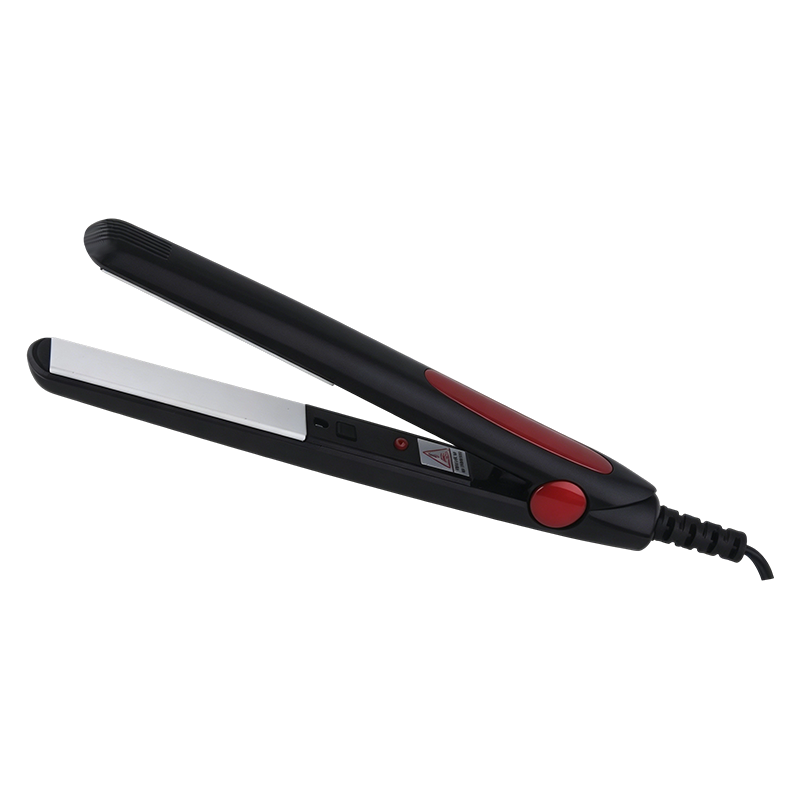
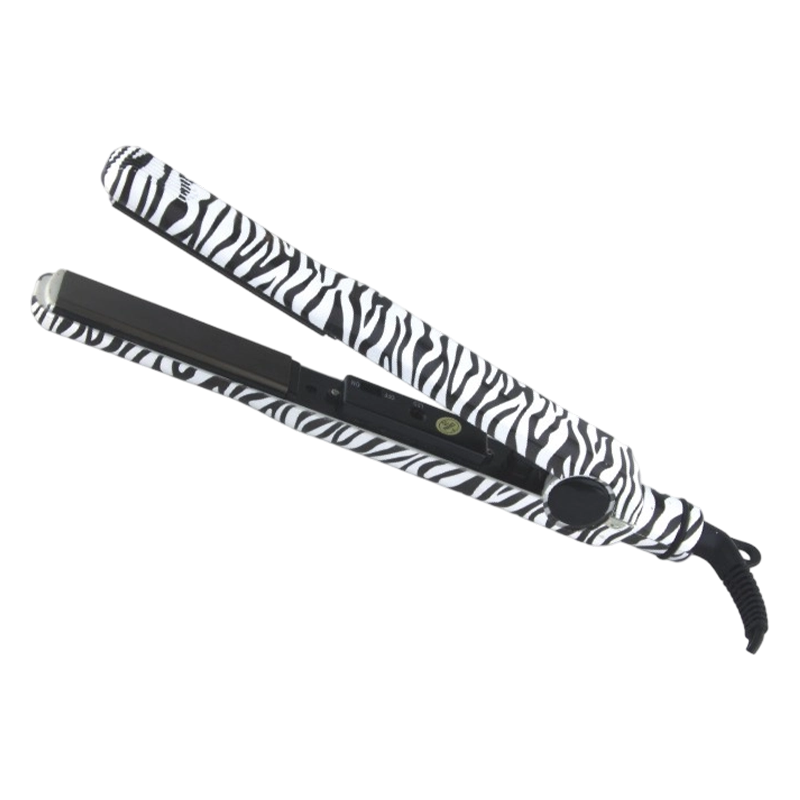
Classic flat irons pull the strand between two heated plates—ceramic, titanium, or tourmaline-coated—at 160°C to 230°C. The heat breaks hydrogen bonds inside the cortex, and the pressure of the plates flattens the cuticle as the hair cools in its new shape. Dry heat also vaporises the natural water inside the hair with every pass, and the accumulation of those losses is what we call heat damage.
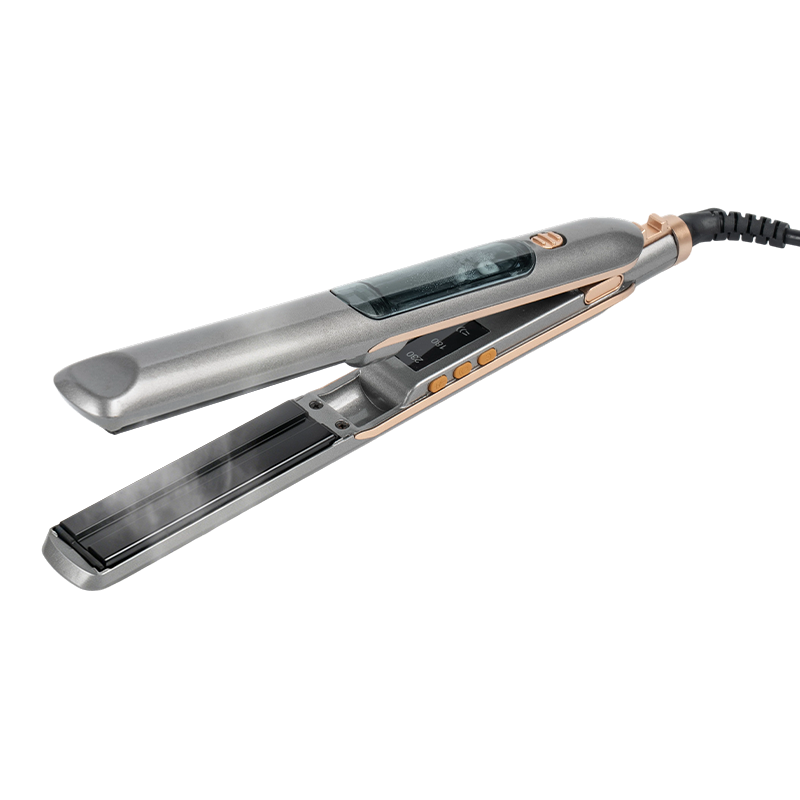
Steam straighteners work differently. A small water tank feeds a heating chamber that produces steam, which is directed around the plates or through a nozzle beside them. Because steam carries heat more efficiently than dry air, the plates can run at 140°C to 185°C and still deliver a straight, smooth result. The hair is not baked into shape; it is softened by moisture, then held flat as it cools.
A useful reference point: keratin begins to soften around 150°C; visible damage becomes common above 200°C. Most steam straighteners sit between 140°C and 185°C, keeping styling effective while staying clear of the damage zone.
How Heat Damage Actually Happens
Hair is almost pure keratin, and heat damage is cumulative. When a fibre is heated, the protein structure softens and the bonds that hold its shape begin to break. Repeated exposure takes a measurable toll: lifted cuticles, split ends, brittle texture.
Moisture decides how fast damage accumulates. Healthy hair carries 10 to 13 percent water. A dry iron pass boils that water away; a steam pass condenses moisture onto the strand during styling, so net water loss stays low. That is the core technical argument for steam.
Steam Straightener vs Flat Iron: Side by Side
Here is how the two technologies compare on the factors that matter most.
| Factor | Classic Flat Iron | Steam Straightener |
|---|---|---|
| Heating principle | Dry contact heat between two plates | Steam plus lower-temperature plates |
| Typical temperature | 160–230°C | 140–185°C |
| Moisture effect | Evaporates moisture on every pass | Adds moisture while styling |
| Cuticle behaviour | Flattens; repeated passes lift the edges | Softens and seals more gently |
| Styling speed | Fast, high throughput | Slightly slower, more controlled passes |
| Best match | Thick, coarse, healthy hair | Fine, dry, colour-treated, fragile hair |
Where Steam Straighteners Earn Their Keep
Steam models justify themselves in three areas. First, lower effective heat. Because steam transfers energy efficiently, plates can run 30°C to 50°C cooler than a dry iron and still straighten thoroughly. Second, hydration. Steam condenses on the strand during the pass, improving shine and preventing the straw-like dryness dry plates leave behind. Third, colour retention. Keeping water in the fibre helps dyed hair hold its tone longer.
Steam also handles frizz differently. The style is set with moisture rather than baked in, so hair is less likely to re-frizz when humidity rises. For anyone who straightens several times a week, these benefits justify the price premium.
Properly engineered steam tools, like our MXN302 nanoscale steam balance straightener, distribute moisture evenly across the plate width so the strand is hydrated before pressure is applied.
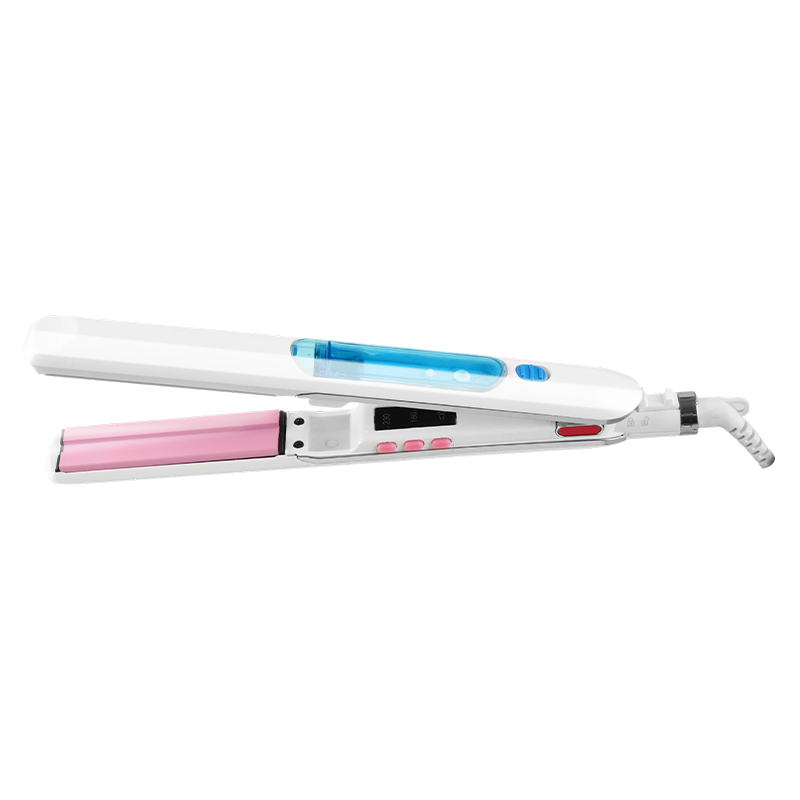 MXN-302 Nanoscale Steam Balance Hair Straightener with Nano-Water Ion TechnologyThis professional steam straightener uses nano-water ion technology to hydrate hair during styling, reducing frizz and heat damage. With 25-30W power, two temperature settings, and a floating plate, it suits fine and color-treated hair, as evidenced by reduced static and breakage in tests.View Product →
In practical terms: side-by-side tests on fine and colour-treated hair show noticeably less static, better shine, and fewer broken fibres after repeated passes with steam compared with dry plates at the same styling speed.
Where a Classic Flat Iron Still Holds Its Ground
Steam does not make the flat iron obsolete. On thick, coarse, or highly textured hair, a titanium or ceramic plate at the upper end of the temperature range still produces the fastest, most definitive result. A dry iron can be pulled through long sections without waiting for steam to act, which matters in a busy salon.
Classic irons are also mechanically simpler. There is no tank to fill, no pump, no steam path to descale. That means a lower price, fewer parts that can fail, and easier servicing. For private-label programmes that need a dependable mid-priced workhorse, a conventional straightener is still the most cost-effective option.
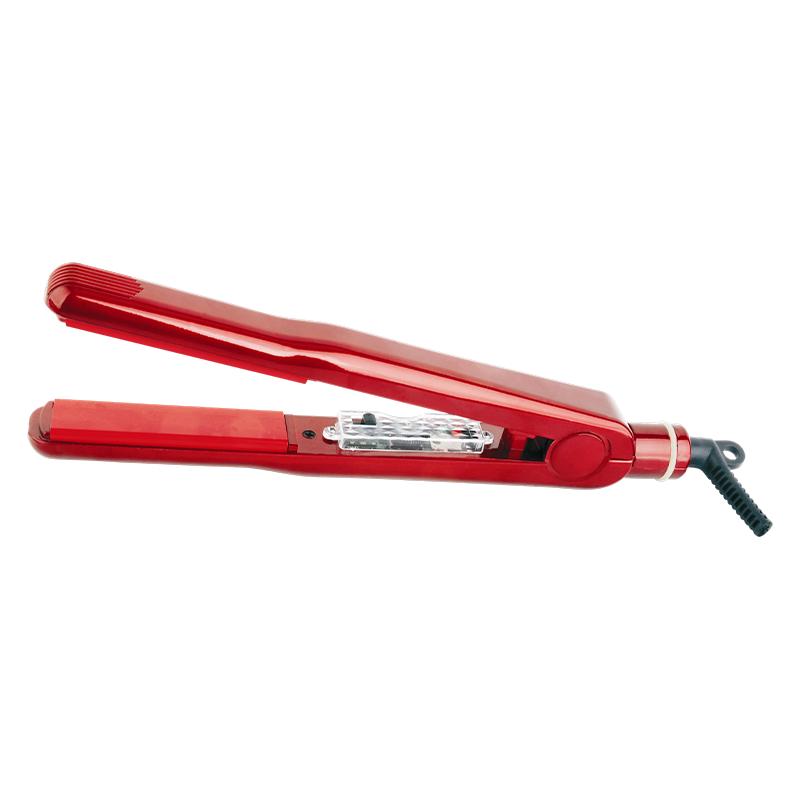
Floating plates and precise digital control have pushed the classic platform close to its practical ceiling. Our MXN819 professional floating-panel temperature-controlled straightener is an example of the category at its best.
 MXN-819 Professional Floating Panel Hair Straightener with Temperature ControlFeaturing a floating ceramic plate that adjusts pressure to prevent localized overheating, this 50W straightener reaches 210°C with precise temperature control. Its 360-degree swivel cord and durable build make it a reliable choice for consistent styling, ideal for users seeking mechanical performance and hair care balance.View Product →
Water, not temperature, is what actually relaxes the hair fibre. The plate simply shapes what the steam has softened.
Who Should Choose Which
There is no universal winner. The right tool depends on the hair it will be used on and the pace of the person using it.
Choose a steam straightener when
- the hair is fine, dry, brittle, or chemically treated
- straightening happens daily or several times a week
- shine and softness matter more than speed
Choose a classic flat iron when
- the hair is thick, coarse, or resistant and needs high heat to change shape
- the tool will be used all day in a professional salon
- you prefer a simple tool with nothing to fill or descale
There is also a middle path. Hybrid tools such as steam combs and atomising brushes apply the same moisture-first principle in a lighter format for touch-ups and loose waves. The MXN688 steam aqua atomized styling comb fits that niche between full straightening sessions.
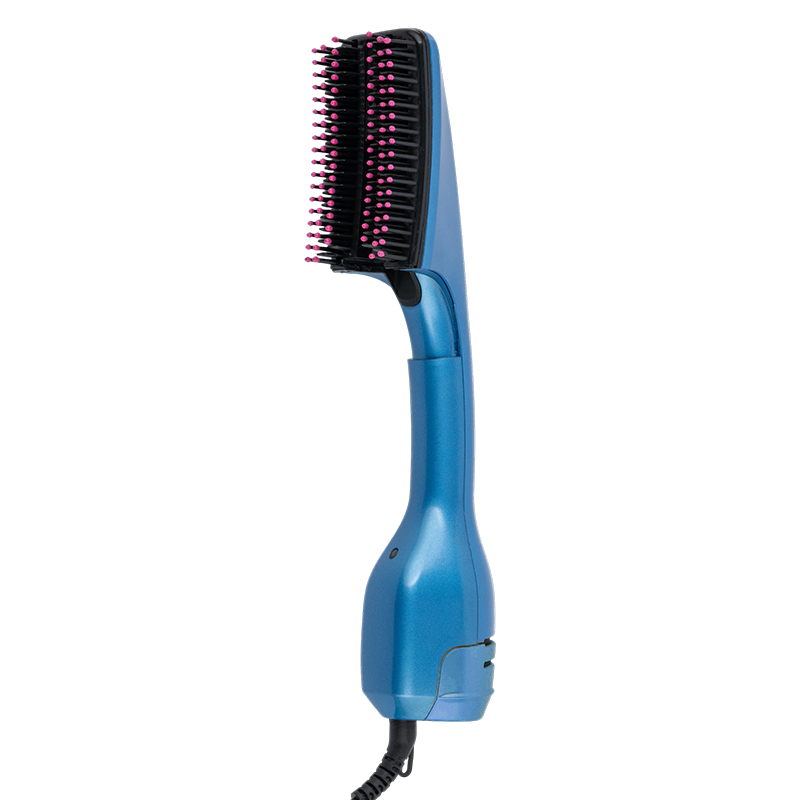 MXN-688 Steam Aqua Atomized Styling Comb for Moisture-Infused Touch-UpsThis 750W styling comb combines hot air with a steam spray system to smooth frizz and static while replenishing moisture. With two heat settings and a cool air option, it's suited for damaged or curly hair, offering a lighter alternative between full straightening sessions—though avoid use on wet hair or bonded extensions.View Product →
One caution: never use a steam straightener on soaking-wet hair, and test it on a small area before using it on extensions or bonded weaves. Steam can swell bonds and loosen adhesives.
What to Check Before You Buy
The name on the box tells you less than the engineering underneath. These are the details we check when building a straightener, and they should guide a purchase too.
- Plate material and finish. Titanium heats fast, ceramic spreads heat evenly, and tourmaline finishes reduce static. Floating plates are essential for even pressure.
- Temperature precision. Digital control with fine steps beats a dial with vague low-med-high zones. Good models hold roughly ±5°C; cheap units can drift by 20°C—the difference between a safe pass and a damaging one.
- Steam system design. Check water capacity, how evenly steam is distributed, and whether the tank is easy to clean. A poorly sealed tank leaks; a badly designed nozzle spits water instead of fine vapour.
- Safety and certification. Automatic shut-off, overheat protection, and heat-resistant housing are baseline. If you are sourcing for a brand, ask the factory to show certification documents and to explain how to tell if a hair straightener is safe before you commit to a large order.
For importers and private-label buyers, add two more checks: temperature consistency across units from the same production run, and the availability of spare parts—plates, cords, tanks—over the product's expected life.
Water quality matters. Hard tap water leaves scale inside the tank and eventually clogs the steam path. Recommend distilled or demineralised water for any steam tool you sell or specify.
The Honest Summary
Steam straighteners are a different way of delivering heat, built around the fact that hydrated hair responds to styling more gently than dehydrated hair. If the priority is the long-term condition of the hair, steam is the more conservative choice. If the priority is speed, simplicity, and a wide temperature range, a well-built flat iron remains entirely valid.
For importers and brand owners, the decision goes beyond consumer preference. Steam models demand a factory that understands fluid paths, sealing, thermal safety, and consistent quality control, not just plate heating. That is why we recommend evaluating the supplier as carefully as the product itself. Review the safety considerations above, then explore our company pages to see whether the manufacturing depth matches the product promise.